Krakow’s Wartime Story
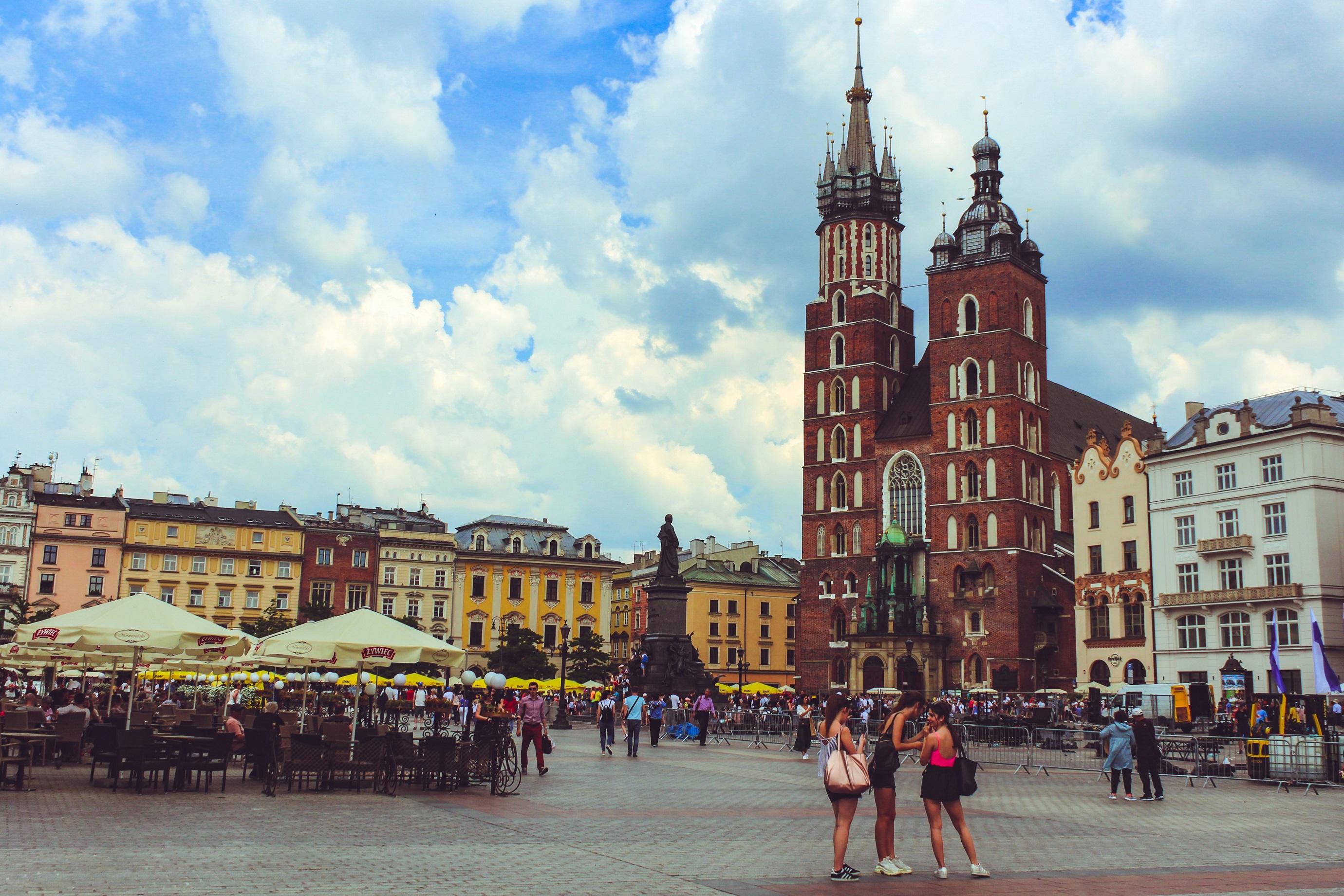
Krakow today – Photo by Severinus Dewantara on Unsplash
While Poland doesn’t always sit at the very top of typical travel bucket lists, it is a country layered with history that continues to shape its cities today. Beyond medieval market squares and Gothic churches lies a more recent and deeply transformative chapter – World War II. Few places allow visitors to explore that period as meaningfully as Krakow.
For those interested in understanding the human stories behind wartime events, following the footsteps of Oskar Schindler offers a powerful way to experience the city. His story is not just about one man. It is about moral choices, survival, loss, and the wartime transformation of an entire community.
This is not a light itinerary. But it is an important one.
Begin in Kazimierz – Life Before the War
Before the Nazi occupation, Kazimierz was the heart of Jewish life in Krakow. For centuries, synagogues, schools, and cultural institutions made this district one of the most vibrant Jewish quarters in Europe.
Walking through Kazimierz today gives essential context. The Old Synagogue, Remuh Synagogue, and the historic cemetery remind visitors that this was once a living, thriving community – not just a tragic footnote. Cafés and galleries now fill many streets, but the architecture still carries memory.
Starting here matters. It shows what existed before persecution reshaped the city.
The Krakow Ghetto – Podgórze and Plac Bohaterów Getta
In 1941, German authorities forced Jewish residents across the Vistula River into the Podgórze district, sealing off what became the Krakow Ghetto.
Today, Plac Bohaterów Getta (Ghetto Heroes Square) is one of the most symbolic memorial sites in the city. Seventy empty metal chairs stand in the square, representing those deported to camps and death sites. It is stark, minimalist, and deeply moving.
Just beside the square stands the Eagle Pharmacy – Apteka pod Orłem. Owned by Tadeusz Pankiewicz, a non-Jewish pharmacist who remained inside the ghetto, it became a point of discreet assistance and documentation. The small museum inside offers personal accounts, photographs, and insight into daily life under extreme oppression.
Standing in Podgórze, it becomes clear how geography was weaponized – entire neighborhoods redefined by ideology.
Oskar Schindler’s Factory – Understanding the Full Story
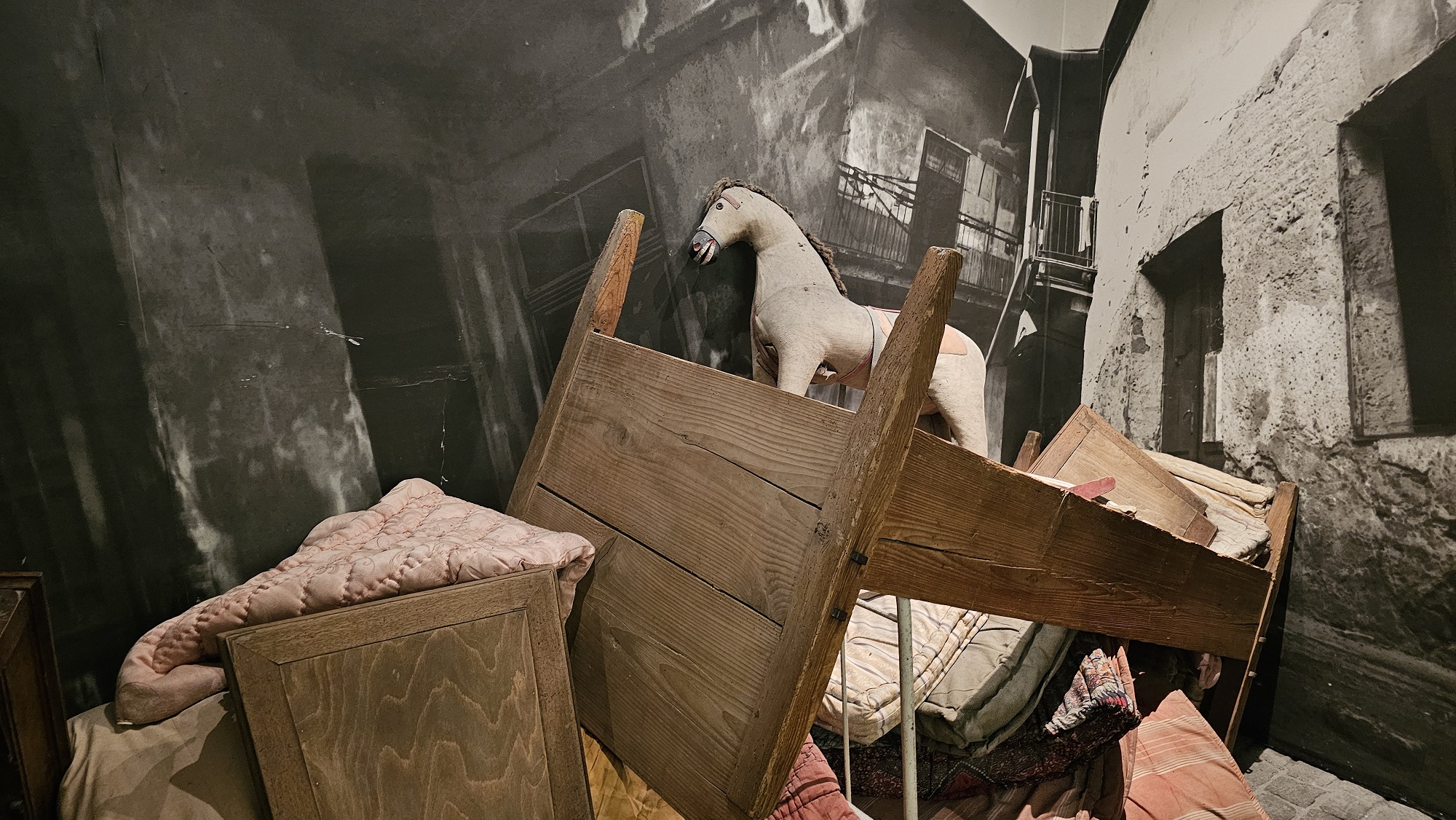
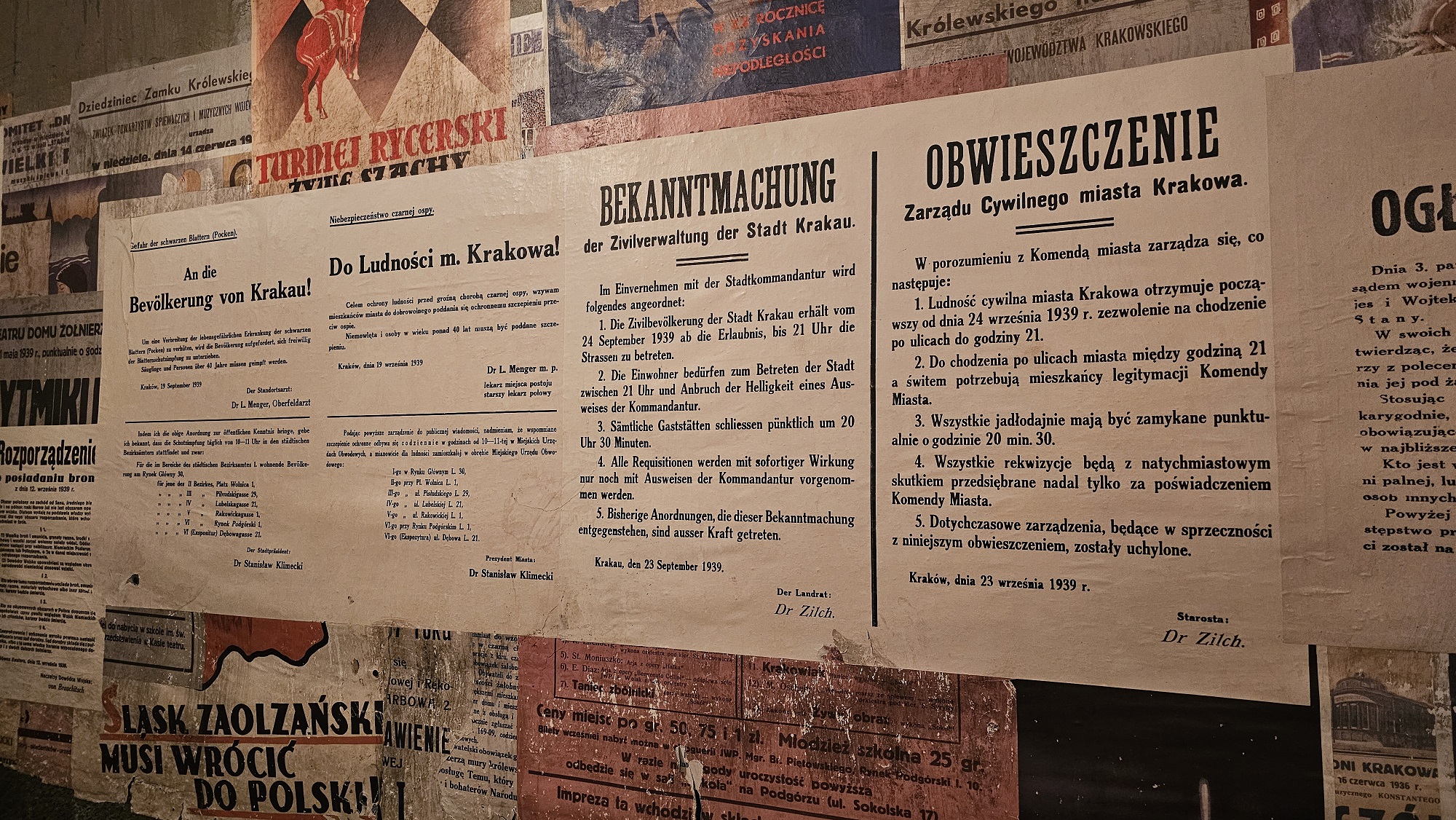
A short walk from the former ghetto stands the former enamel factory owned by Oskar Schindler. Today, it houses one of Krakow’s most significant museums – dedicated to “Krakow under Nazi Occupation 1939–1945.”
This is not a traditional museum with simple display cases. The exhibition is immersive. You walk through reconstructed streets, offices, apartments, and wartime spaces. Archival photographs blend with sound design and personal testimonies to create a layered narrative.
Oskar Schindler himself remains a complex figure. A member of the Nazi Party and a businessman seeking profit at the start of the war, he later used his factory as a protective shield for more than a thousand Jewish workers. Historians continue to debate his motivations, but the lives saved are undeniable.
The museum does not romanticize him. Instead, it places his actions within the broader story of occupied Krakow – making the experience both educational and reflective.
For visitors who want deeper historical context and structured insight during their visit, a Schindler’s factory tour can help bring the exhibition to life. A knowledgeable guide can clarify timelines, explain lesser-known details, and connect Schindler’s decisions to the wider occupation policies affecting the city.
KL Plaszow – A Landscape of Memory
A short distance from the factory lies the site of the former KL Plaszow forced labor camp. Unlike Auschwitz-Birkenau, Plaszow was not preserved with original barracks or structured exhibitions. Today, it is largely an open terrain marked by monuments and information boards.
This was the camp commanded by Amon Göth, and many prisoners from the Krakow Ghetto were sent here. Visiting Plaszow is quieter, more abstract. The emptiness itself becomes part of the experience.
It requires imagination. It invites reflection.
Krakow in the Broader Polish Context
Understanding Schindler’s story also means placing it within Poland’s broader historical landscape. During World War II, Krakow became the administrative center of the German-occupied General Government. Policies of segregation, forced labor, and extermination reshaped both Jewish and Polish communities.
Poland’s history stretches far beyond this period – from medieval kingdoms to Renaissance culture, to fourteen UNESCO World Heritage Sites. But World War II remains a defining chapter.
For travelers exploring the country more widely, this overview of tourist attractions in Poland offers helpful inspiration beyond Krakow. Combining cultural landmarks with historical sites creates a fuller understanding of the nation’s complexity.
Practical Tips for Visiting
- Book in advance – Schindler’s Factory is one of the most visited museums in Krakow. Tickets frequently sell out, particularly between April and October.
- Tickets are personal and require ID – Entry tickets are issued with the visitor’s name and are non-transferable. At the entrance, you must present a valid ID (passport or national ID card) to confirm your identity. Make sure the name on your booking matches your identification document exactly.
- Arrive slightly early – Entry is scheduled for a specific time slot. Arriving 10–15 minutes before your allotted time allows for smoother entry.
- Allow enough time inside – Plan for approximately 1.5–2 hours to properly explore the exhibition.
- Create a meaningful route – A thoughtful day might begin in Kazimierz, continue to the Ghetto site in Podgórze, move to Schindler’s Factory, and finish at the Plaszow memorial grounds.
Why This Journey Matters
Oskar Schindler’s legacy resonates because it is not simple. He was neither entirely hero nor villain in the beginning. His story is one of moral evolution in extreme circumstances.
Walking through Krakow transforms abstract history into physical space. Streets, buildings, and squares become chapters in a larger narrative about occupation, resistance, and survival.
Travel can be about beauty and relaxation. But sometimes it is about understanding.
Following the footsteps of Oskar Schindler in Krakow offers more than a museum visit. It provides context, perspective, and a deeper connection to one of the most consequential periods of the twentieth century.
And sometimes, the most meaningful journeys are not the easiest ones – but the ones that stay with you long after you leave.