Cusco Trekking Solo: a 9-day route through the Sacred Valley
At 5:14 in the morning of 12th April 2025, I sat on the curb outside Pariwana Hostel in central Cusco, drinking coca tea from a paper cup and watching a stray dog inspect my boots with the gravity of a customs officer. The taxi to Mollepata was eight minutes late. The plan said nine days. The altimeter said 3,399 metres and my lungs already disagreed.
This was my second solo Cusco loop. The first, in June 2023, I had walked badly. I flew in from Lima at lunchtime, started the Salkantay trek the following dawn, and spent the second night vomiting into a stuff sack at 4,200 metres on the Salkantay Pass. A Belgian nurse in the next tent shared her rehydration salts and a long sentence about altitude that ended with the word “patience”. I have never forgotten it.
This is the route I wish I had walked first.
Cusco Trek Route
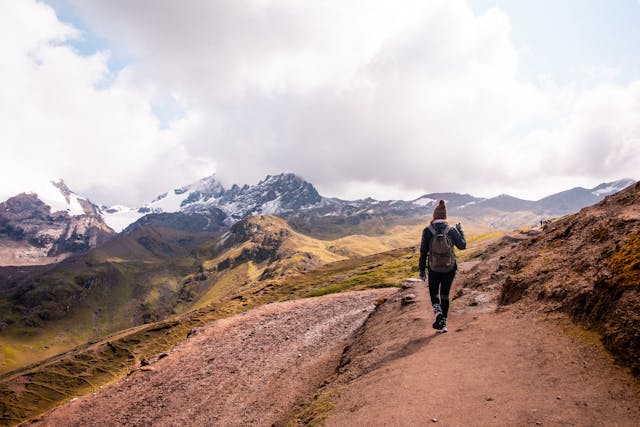
A woman hiking on a scenic trail in the Andes mountains of Cusco, Peru. by Alvaro Palacios via Pexels
- Total time: 9 days, Cusco round-trip, with two acclimatization days built in before any climbing.
- Distance: ~85 km on foot across three trekking blocks; the rest is buses, colectivos, and PeruRail.
- High point: Salkantay Pass (4,630 m / 15,190 ft) on Day 4; sleep low afterwards.
- Best months: May to early September (dry season); shoulder weeks in late April and mid-September are quieter.
- Solo friendly? Yes, on the Salkantay-Lares alternative. The classic Inca Trail still requires a licensed guide and a permit.
- One thing to book early: Machu Picchu entry slot (Circuit 2, morning) and the Ollantaytambo-to-Aguas Calientes PeruRail leg.
Day 1 and 2: Cusco at 3,400 meters (and why you don’t walk yet)
Fly into Cusco from Lima in the morning. Take a taxi to San Blas (about 15 soles), drop your pack, and do almost nothing for two days. This is the most important advice in the whole guide.
Walk to the Plaza de Armas. Sit. Drink coca tea. Eat soup. Sleep early. On Day 2, climb slowly to the Sacsayhuamán ruins on foot, not by van. The 250-metre vertical gain is the test: if you can walk it without your heart pounding in your ears, you are ready for the trail. If you cannot, give yourself another day. Cusco has many small museums and absolutely no shortage of bakeries on Calle Plateros for the purpose.
The rule on the Andes is simple. Acclimatization saved is not earned back later.
Day 3: Mollepata to Soraypampa (the start of the Salkantay alternative)
Cusco to Mollepata by colectivo from Calle Arcopata; about three hours and 25 soles. From Mollepata it is a 12-kilometre walk to the Soraypampa basecamp at 3,900 metres, mostly on a dirt track with a long, slow gain. You will pass two small refugios that sell water and Cusqueña beer. Buy water, skip the beer.
Soraypampa has a clutch of glass-domed “sky lodges” and several cheaper trekker camps. The Salkantay summit floats directly above you in the late light and the temperature drops fast after the sun goes. Sleep in two layers and a hat.
Day 4: Salkantay Pass and down to Chaullay
The pass is the hard day. You leave camp by 6:00, climb steadily to the 4,630-metre col by mid-morning, and then descend roughly 1,500 vertical metres into cloud forest by evening. The col itself is exposed; do not linger. The wind picks up by 11:00 and the temperature drops with it.
Chaullay sits at 2,900 metres in a steep green valley that does not feel like the same country you left at dawn. There are basic dormitorios and one warm-shower lodge. Eat early, sleep early.
Day 5: Chaullay to Lucmabamba and the Lares variant junction
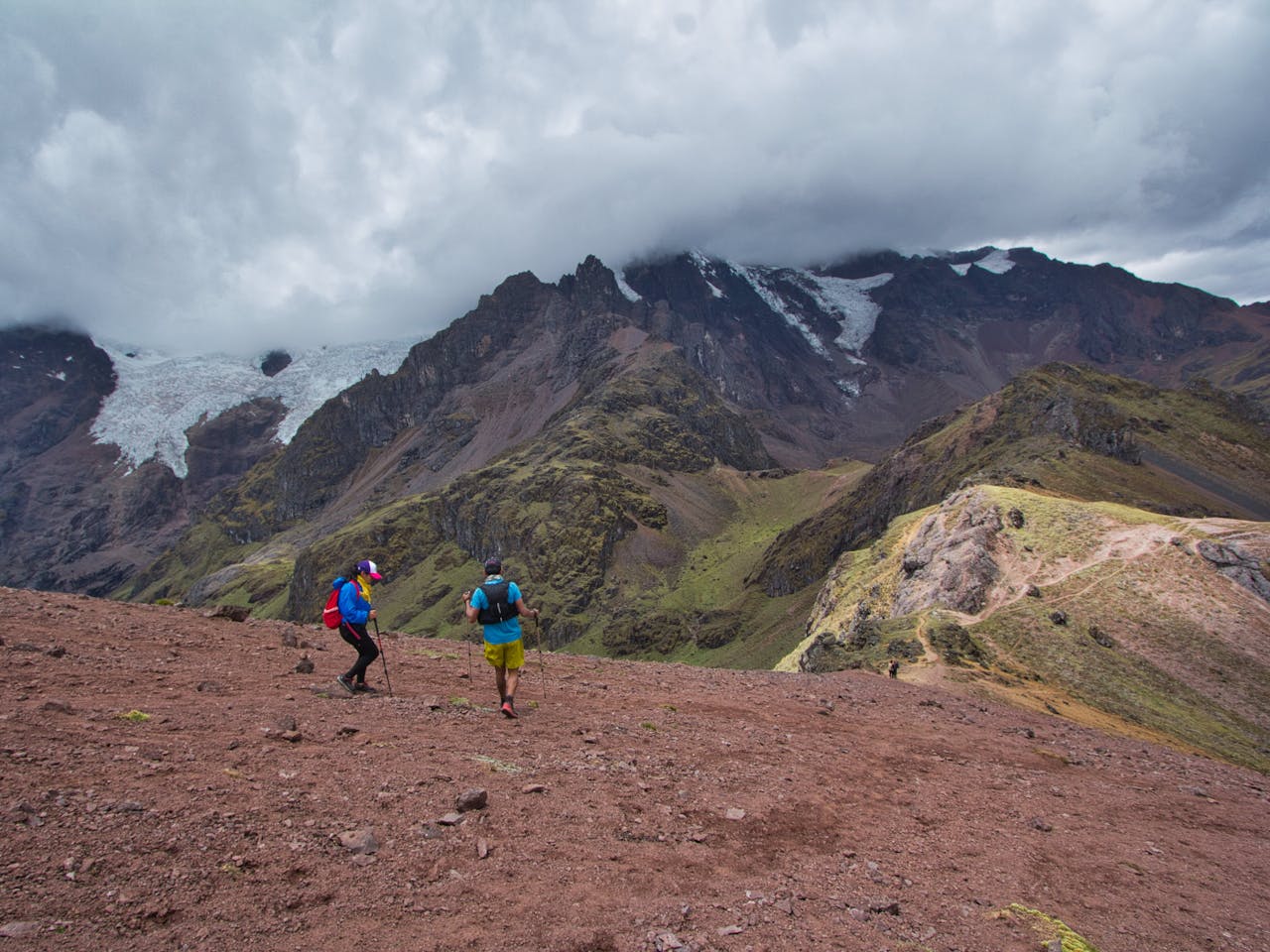
Cusco Hike – Photo Da Vid via Pexels
A short walking day, mostly downhill, ending at the coffee-farm hostels around Lucmabamba. This is where the route diverges. The classic Salkantay trek pushes on to Llactapata and Hidroeléctrica; the Lares-variant alternative cuts north into the Sacred Valley through Patacancha. I take the Lares-variant on a solo trip because it brings you out near Ollantaytambo with two full rest days in hand, instead of the headlong rush to Aguas Calientes that the Salkantay finish encourages.
Either way, sleep at Lucmabamba and decide over breakfast.
Day 6: Patacancha to Ollantaytambo (the slow Sacred Valley middle)
Bus or colectivo from Lucmabamba to Patacancha (about four hours including the change at Calca; expect a long morning). From Patacancha, walk down-valley to Ollantaytambo over six unhurried hours: 14 kilometres of farm tracks, a Quechua weaving cooperative at Willoq, and a final approach into Ollanta past the terraces.
Stay two nights. Ollantaytambo is the last living Inca town with the original street grid intact, and the ruins above the plaza open at 7:00 to a near-empty terrace.
Day 7: Rest day in Ollantaytambo; PeruRail to Aguas Calientes in the late afternoon
This is the cushion the trip needs. Walk up the Pinkuylluna granaries on the eastern side of the valley for a quiet view of the main ruins. Eat lunch at the market. Sit in the plaza with a book. At 16:36, take the PeruRail Vistadome to Aguas Calientes (about 1 hour 45 minutes). You arrive in the dark to a town that exists for one reason and runs accordingly.
Book the train at least a month ahead, longer in July and August. The 16:36 in particular fills early.
Day 8: Machu Picchu (short Inca Trail variant) and back
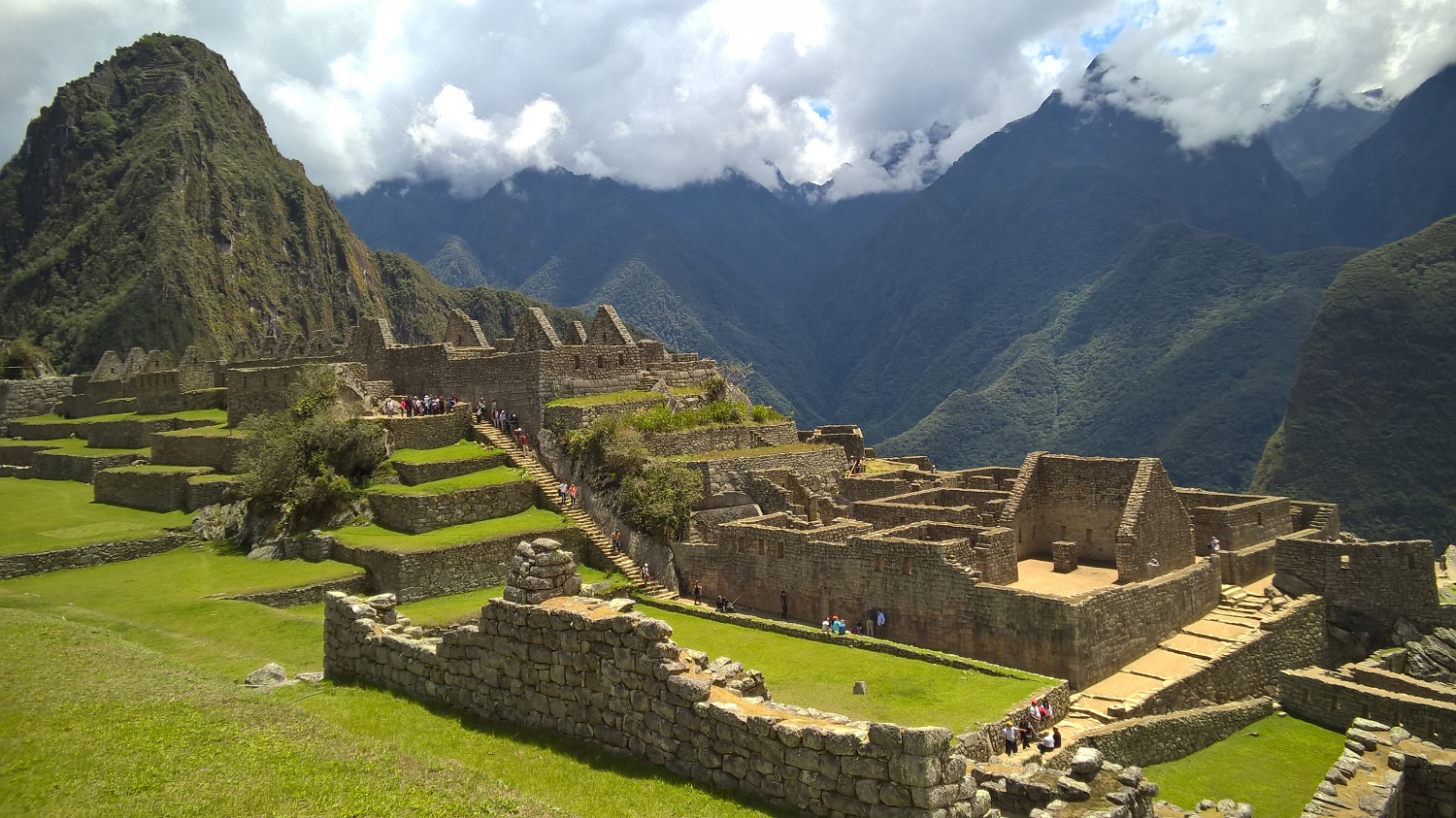
Image by anedallago from Pixabay
Two ways to do this. The orthodox way is the bus from Aguas Calientes up to the citadel gate, in by 6:00, Circuit 2 for the postcard view across the terraces. The better way for a solo trekker who has walked this far is the short Inca Trail variant from KM 104, which I book through a Cusco operator a week ahead.
The KM 104 walk is a six-hour, 12-kilometre approach through Chachabamba and Wiñay Wayna to Inti Punku, the Sun Gate, and down onto Machu Picchu from above in the early afternoon. It is the only legal foot-approach to the citadel that does not require a 4-day Inca Trail permit. You walk in. The thing reveals itself the way it was meant to.
Sleep one more night in Aguas Calientes. The early train back to Ollantaytambo (5:05) catches the Cusco connection by mid-morning.
Day 9: Cusco again, and one quiet evening in San Blas
PeruRail Expedition at 05:05 from Aguas Calientes to Ollantaytambo; colectivo from Ollanta to Cusco (about 1 hour 45, 15 soles); a long shower at the same hostel where you started.
In the late afternoon, walk up to the San Blas mirador with a Cusqueña and a bag of choclo from the market. The city falls away in red tiles and the sun does what suns do here, which is sit on the horizon for an extra unreasonable minute before letting go.
This is the part of the trip the photos never get right.
Staying Reachable on the trail
Long Andean trips are not the place to be glued to a screen, but reaching home and reading weather are different beats. The route splits neatly into three signal zones: the urban Cusco-Ollanta-Aguas Calientes corridor (strong), the Sacred Valley villages (workable), and the high passes (dead).
What works where, by carrier
In the city sections (Cusco, Ollantaytambo, Aguas Calientes, the Calca-to-Pisac road), Movistar Perú and Claro Perú both carry steady 4G, with Bitel a serviceable third. I had a HelloRoam Peru plan loaded for the Sacred Valley loop in April 2025; it routed through Movistar Perú, which mattered on the Patacancha-to-Ollanta descent because that is the only network with a tower above the Willoq weaving cooperative. Bitel is the carrier most often quoted as the rural workhorse, and in practice that holds along the Mollepata road and at Soraypampa.
Above the tree line (the Salkantay basecamp, the pass itself, anything past 4,000 metres), none of the three carriers reach. Plan accordingly.
How to actually use the signal
Use signal for two things only: confirming the next train (PeruRail’s app needs a live data check the night before) and reading the morning forecast from the refugio. Off-duty, leave the phone in airplane mode. The Sacred Valley is short enough that you do not need to be reachable, and long enough that you will be glad you were not.
A short note on solo safety
Cusco is one of the safer South American capitals for solo travelers, including women, but the standard rules apply: walk in pairs after midnight in San Pedro, do not flash a phone on the Plaza, and ignore the unsolicited “massage” leaflets on Procuradores. On the trail you are almost always within sight of another walker by mid-morning. The Salkantay-Lares corridor sees several hundred trekkers a week in season.
The taxi drivers in Cusco are honest and the rates are fixed by the city. The colectivo drivers are honest too, but you pay on boarding and there are no receipts. This is the rhythm.
Cusco Trekking FAQ
How many days do you need for a Cusco trek?
Nine days is the minimum for a Cusco loop that includes Machu Picchu without sprinting. Two for acclimatization, three on the Salkantay-Lares alternative, two slow days in the Sacred Valley, one for the Inca Trail short variant, and one to recover in Cusco. Anything shorter and altitude wins.
How do you acclimatize in Cusco before trekking?
Walk slowly for the first 48 hours. Sleep at 3,400 meters in Cusco, drink coca tea, eat soup, and climb to Sacsayhuamán on foot on Day 2 as your test. If your heart races on the stairs, take a third rest day. Diamox helps but is not a substitute for time.
Salkantay or Inca Trail for first-time solo trekkers?
The Salkantay-Lares alternative for first solo trips. The classic Inca Trail requires a licensed guide, a permit booked months ahead, and a fixed four-day group. Salkantay is permit-free, walkable independently, and finishes with the KM 104 short-trail variant into Machu Picchu for those who still want to walk in through the Sun Gate.
Is it safe to trek alone around Cusco?
Yes, on the busy corridors. The Salkantay and Lares routes see steady solo traffic through dry season and most lodges and refugios fill with a friendly mix of trekkers and operators. Avoid the more remote Choquequirao traverse without a guide.
What does a 9-day Cusco trek cost on a solo budget?
Around $1,100 to $1,600 USD for a mid-range solo run: hostel beds in Cusco and Ollantaytambo, mid-level lodges on the trail, the PeruRail return, the Machu Picchu entry, the KM 104 short-trail permit and operator, and food. Flights from Lima are separate, usually $90-130 USD round-trip.
Closing note on Cusco Trekking
The Cusco trek is not the hardest thing the Andes can show you. What it is, is the one that teaches you how to walk the rest of them: the altitude rhythm, the rest day discipline, the patience that the Belgian nurse meant in 2023 when she finished her sentence on the Salkantay Pass.
You finish on the San Blas Mirador, looking down at the same red roofs you woke up beside on Day 1, and the loop is closed in a way that very few trips manage. Sometimes the simplest route turns out to be the one worth doing first.
Stay Luxurious
If you are looking to book such a fantastic endeavor, contact us at Stay Luxurious and sign up for a free travel consultation.